
Platform Rexizon SMART-F
Where Sustainability Meets Performance and Savings: Turning Commitments into Real-Time Operational Intelligence.
SMART-F stands for Sustainable Metrics Assessment Report of Product/Service and Process — Footprints. It is Rexizon's integrated ESG impact performance platform, embedding sustainability measurement directly into operational process control so that your commitments translate into measurable, continuous improvement — not just periodic reports.
Request a Demo Explore the Framework
The Sustainability
Imperative
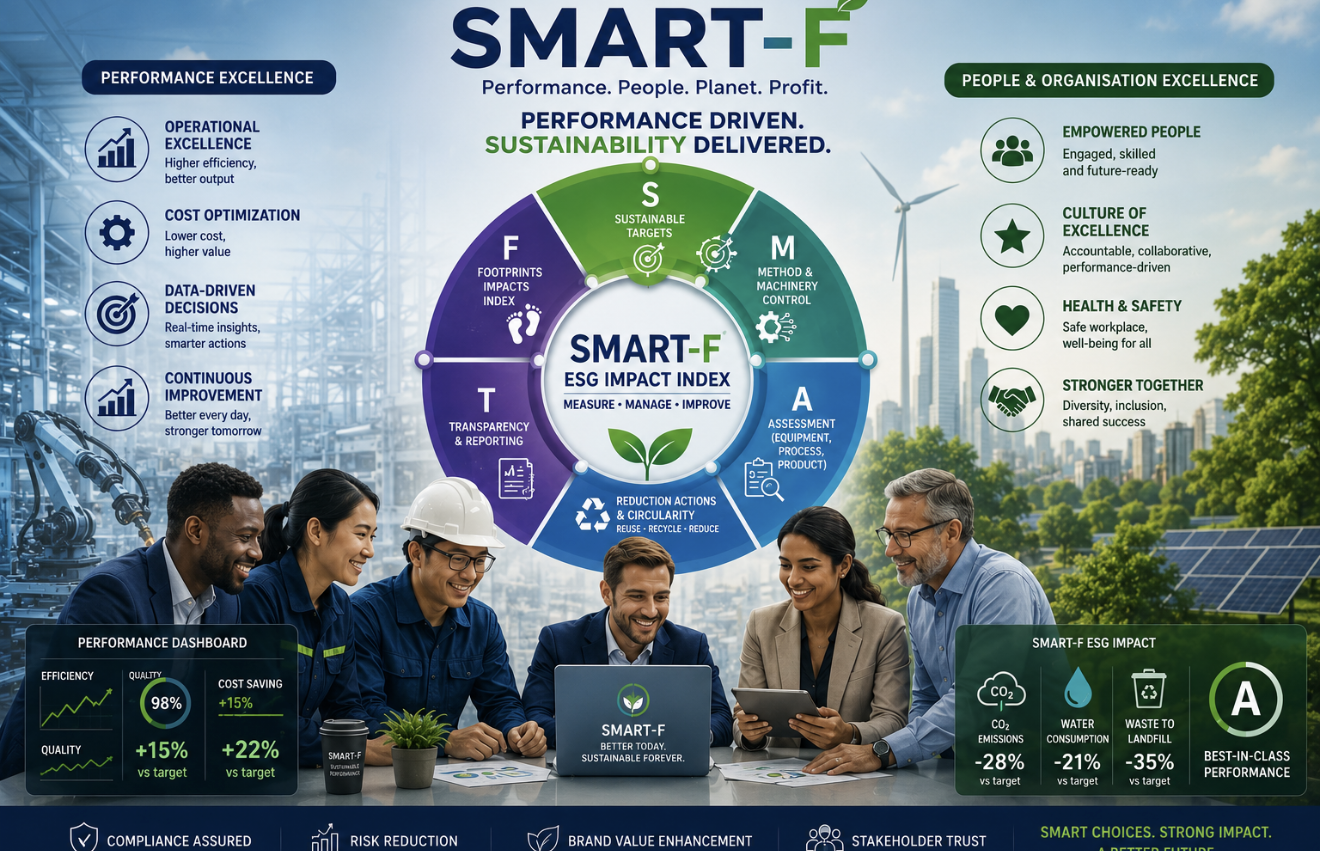
Vague sustainability claims are no longer enough.
Regulators, investors, and procurement teams are demanding verifiable, real-time evidence — not annual PDF reports prepared months after the fact. Organisations that cannot demonstrate live, operational sustainability performance are losing contracts, failing ESG due diligence, and missing the efficiency gains that integrated environmental intelligence makes possible.
The gap between sustainability commitments and operational reality is widening. Most organisations collect environmental data in silos — carbon tracked by one team, water by another, waste by a third — with no unified view, no composite score, and no mechanism to feed insights back into the processes that generate the impact in the first place.
SMART-F bridges that gap. By embedding a unified composite KPI directly into your operational process control layer, it turns sustainability data into actionable intelligence — in real time, across every relevant dimension of environmental performance.
The SMART-F Framework
Six Strategic Pillars
Each letter of SMART-F represents a foundational dimension of integrated sustainability performance.
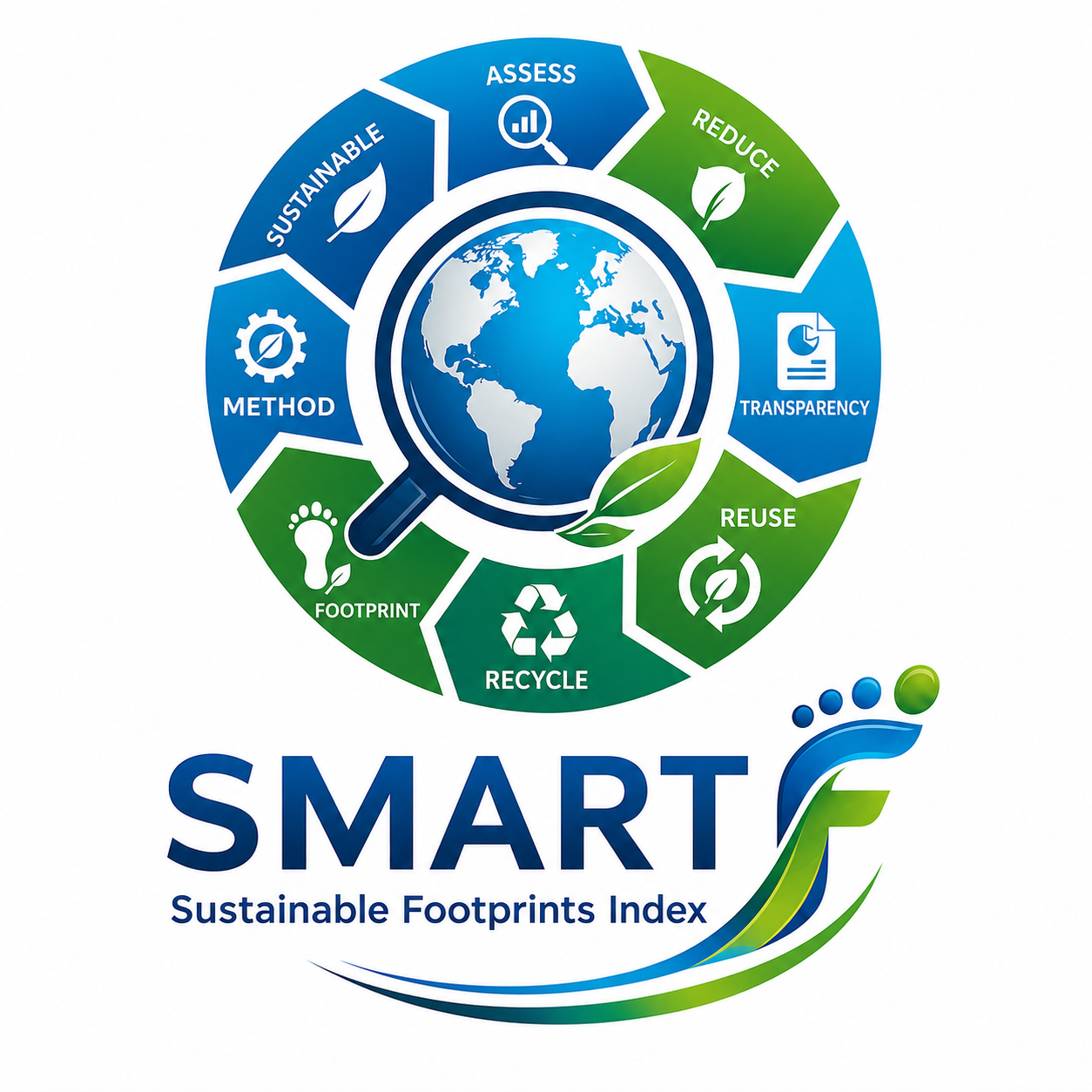
Sustainable Benchmarks & Targets
Establish science-based sustainability benchmarks aligned with sector best practice, regulatory requirements, and international frameworks. Define measurable reduction targets that anchor operational decisions to verifiable environmental outcomes.
Method: Manufacturing Process Control
Integrate environmental KPIs directly into manufacturing and process control systems. Real-time monitoring of energy, water, chemical, and waste flows enables closed-loop feedback — so sustainability performance is managed, not merely measured.
Assessment
Conduct comprehensive lifecycle and process-level assessments across carbon, water, chemical, and waste dimensions. Identify hotspots, inefficiencies, and improvement opportunities with the granularity needed to drive meaningful change.
Reduction & Circularity
Design and implement reduction roadmaps across all environmental footprints. Embed circular economy principles — material recovery, waste valorisation, and closed-loop resource flows — to simultaneously cut costs and environmental impact.
Transparency & Reporting
Generate auditable, investor-grade sustainability reports aligned with IFRS S1/S2, GRI, TCFD, and ISSB disclosure standards. Communicate verified performance to regulators, customers, and capital markets with confidence and credibility.
Footprints IMPACTS Index
Aggregate carbon, water, chemical, and waste footprints into a single composite performance index — the SMART-F Score. This unified metric enables sector benchmarking, A/B/C/D performance grading, and direct integration into operational dashboards and management reporting.
A Unified Composite KPI
One score. Every dimension. Dynamically weighted by sector and region.
=
w₁ × (CO₂ / Energy)
+ w₂ × (Water)
+ w₃ × (Chemicals)
+ w₄ × (Waste / Circularity)
Dynamic Weighting
The weighting coefficients w₁ through w₄ are not fixed — they are calibrated dynamically to reflect the specific environmental materiality profile of each organisation's sector and operating region. In water-intensive industries such as food processing or textiles, w₂ carries a higher weighting, reflecting the disproportionate environmental significance of water consumption in those value chains. In chemical manufacturing or pharmaceutical production, w₃ may dominate. For logistics and energy-intensive operations, w₁ takes precedence.
Regional context matters equally: operating in a water-stressed catchment area, a carbon-regulated jurisdiction, or a territory subject to chemical restriction frameworks all influence the appropriate weighting profile. Rexizon's sector specialists calibrate the coefficients collaboratively with each client organisation, ensuring that the SMART-F Score reflects genuine environmental materiality — not a generic average.
This adaptive approach means that the SMART-F Score is genuinely comparable within a sector while remaining sensitive to each organisation's unique operational and regulatory context. It drives investment towards the environmental dimensions where improvement will have the greatest real-world impact.
Performance Benchmarking
Your SMART-F Score translates directly into a performance grade, benchmarked against sector peers.
Best-in-Class
Leading performance across all four footprint dimensions. Recognised as a sustainability benchmark in your sector. Eligible for Rexizon certification and ESG disclosure premium positioning.
Above Average
Strong overall performance with clear improvement trajectory. Above-average compliance and efficiency. Targeted optimisation in one or two dimensions will unlock A-grade status.
Compliant
Meeting minimum regulatory and framework requirements. Significant efficiency and cost-reduction opportunities remain. A structured SMART-F improvement programme will accelerate progress.
At Risk
Performance below sector average in one or more critical dimensions. Exposure to regulatory risk, supply chain exclusion, and investor scrutiny. Immediate corrective action recommended.
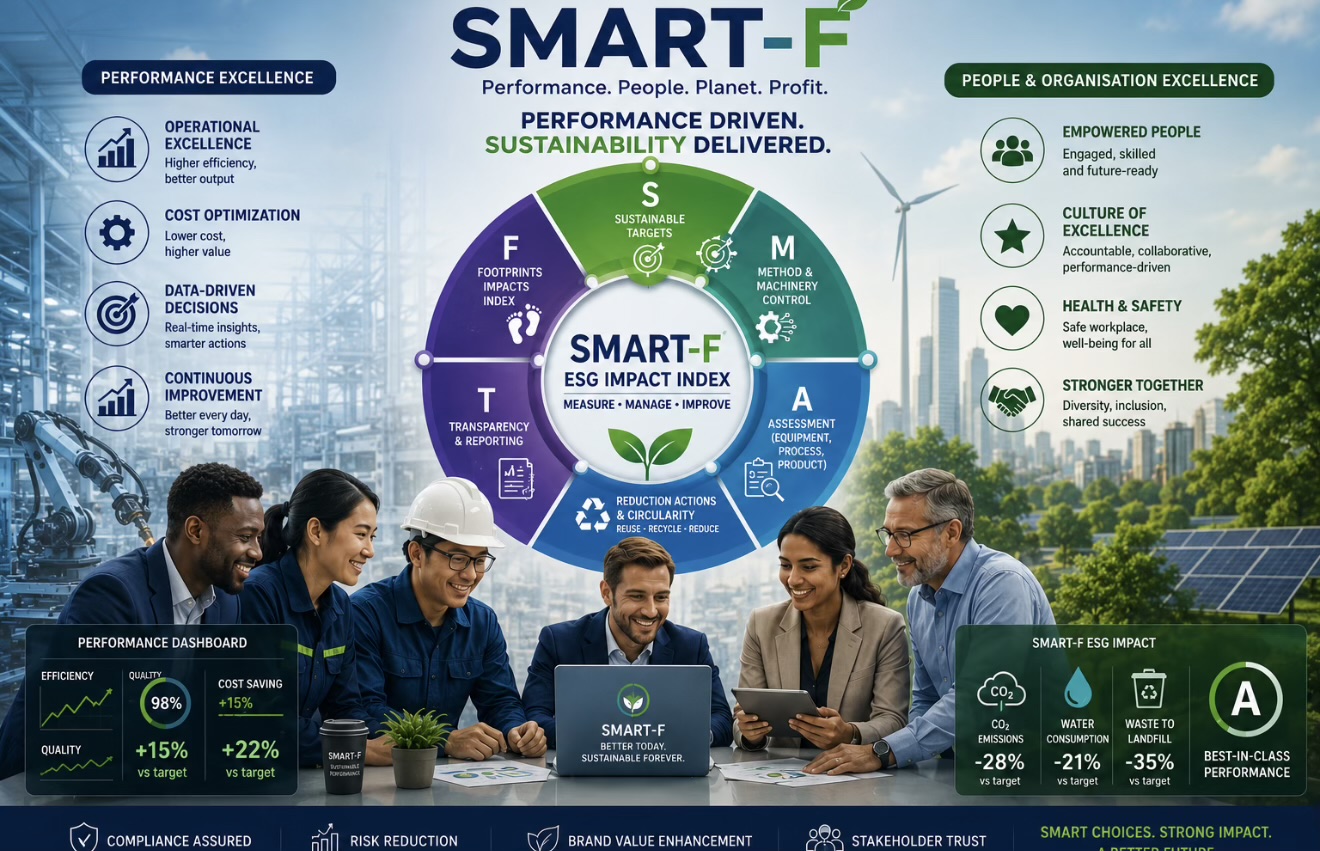
Why SMART-F Is a
Business Game-Changer
Sustainability as a source of competitive advantage, not just a compliance cost.
Closed-Loop Control
SMART-F feeds environmental performance data back into the operational systems that generate it. When a KPI threshold is approached — carbon intensity per unit, water consumption per batch, chemical discharge per run — the platform triggers alerts or automated process adjustments before the boundary is breached. This closed-loop architecture turns sustainability from a reporting exercise into an operational discipline, embedding environmental intelligence into the daily rhythm of production management.
Cost & Sustainability Optimisation
Environmental efficiency and financial efficiency are not in tension — they are the same thing. Every litre of water saved is a cost avoided. Every kilogram of waste diverted from landfill is a disposal charge eliminated and a material cost recovered. Every reduction in energy intensity reduces exposure to volatile energy prices. SMART-F makes this relationship visible and actionable, providing the analytical foundation to simultaneously optimise cost and environmental performance — and to quantify the financial value of sustainability improvement for internal investment cases and external stakeholder communication.
Smarter CAPEX
Capital investment decisions — new equipment, process upgrades, facility improvements — have long-term environmental consequences that are rarely quantified at the time of commitment. SMART-F changes this by providing environmental performance modelling for investment scenarios: before a capital decision is made, its projected impact on the SMART-F Score can be evaluated alongside its financial return. This enables organisations to prioritise CAPEX that delivers the best combined financial and environmental outcome — and to demonstrate to investors and regulators that sustainability is integrated into capital allocation, not added on as an afterthought.
Competitive Advantage
In markets where sustainability credentials are increasingly a prerequisite for procurement qualification, investor capital, and consumer trust, a verified SMART-F Score becomes a strategic differentiator. Organisations with A or B grades gain access to preferred-supplier programmes, green financing, and ESG-linked commercial arrangements that are closed to lower-performing competitors. As mandatory sustainability disclosure becomes the norm across jurisdictions, those with integrated real-time performance systems will satisfy requirements at a fraction of the compliance cost — turning a regulatory obligation into a market advantage.
Ready to transform your sustainability performance into operational intelligence?
Get Started Explore Smart ESG-FRexizon Global Solutions Ltd © 2026 All Rights Reserved